ARS MACABRA — Skönheten i det GroteskaLa belleza en lo grotescoThe Beauty of the Grotesque
"The beautiful is always bizarre."«Lo bello es siempre extraño».
Galleri: Det Sublima och det SannaGalería: Lo sublime y lo verdaderoGallery: The Sublime and the True
Här presenteras Ars Macabra, en digital representation av min personliga samling. Detta galleri samlar de visuella uttrycken för de sanningar mänskligheten så tappert försöker ignorera, och dessa verk är mina absoluta favoriter. Från Goyas svarta målningar till Beksińskis apokalyptiska landskap. Jag har valt varje verk för dess förmåga att hylla den råa skönheten, den kosmiska konflikten och det sublima i det groteska, genom att tränga bortom ljuset.
Var och en av dessa målningar har också sin givna plats i mitt gotiska Palatium Memoriae. De hänger som tysta väktare längs de slingrande korridorerna, vilar i studierummets skuggor eller blickar ner över danssalen. Hundratals verk syns och förnims genom hela slottets arkitektur, men deras exakta placering i minnespalatset är min egen hemlighet att veta.
Aquí se presenta Ars Macabra, una representación digital de mi colección personal. Esta galería reúne las expresiones visuales de aquellas verdades que la humanidad intenta ignorar con tanto valor, y estas obras son mis favoritas absolutas. Desde las pinturas negras de Goya hasta los paisajes apocalípticos de Beksiński. He elegido cada obra por su capacidad de poner de relieve la belleza cruda, el conflicto cósmico y lo sublime en lo grotesco, penetrando más allá de la luz.
Cada una de estas pinturas también tiene su lugar asignado en mi gótico Palatium Memoriae (Palacio de la Memoria). Cuelgan como guardianes silenciosos a lo largo de los corredores serpenteantes, descansan en las sombras de la sala de estudio o miran hacia abajo sobre el salón de baile. Cientos de obras se ven y se perciben a través de toda la arquitectura del castillo, pero su ubicación exacta en el palacio de la memoria es mi propio secreto.
Here is Ars Macabra, a digital representation of my personal collection. This gallery gathers the visual expressions of the truths humanity so bravely tries to ignore, and these works are my absolute favorites. From Goya's black paintings to Beksiński's apocalyptic landscapes. I have chosen each work for its ability to celebrate raw beauty, cosmic conflict and the sublime in the grotesque, by pushing beyond the light.
Each of these paintings also has its given place in my gothic Palatium Memoriae. They hang as silent guardians along the winding corridors, rest in the shadows of the study or gaze down over the ballroom. Hundreds of works are seen and sensed throughout the castle's architecture, but their exact placement in the memory palace is mine alone to know.
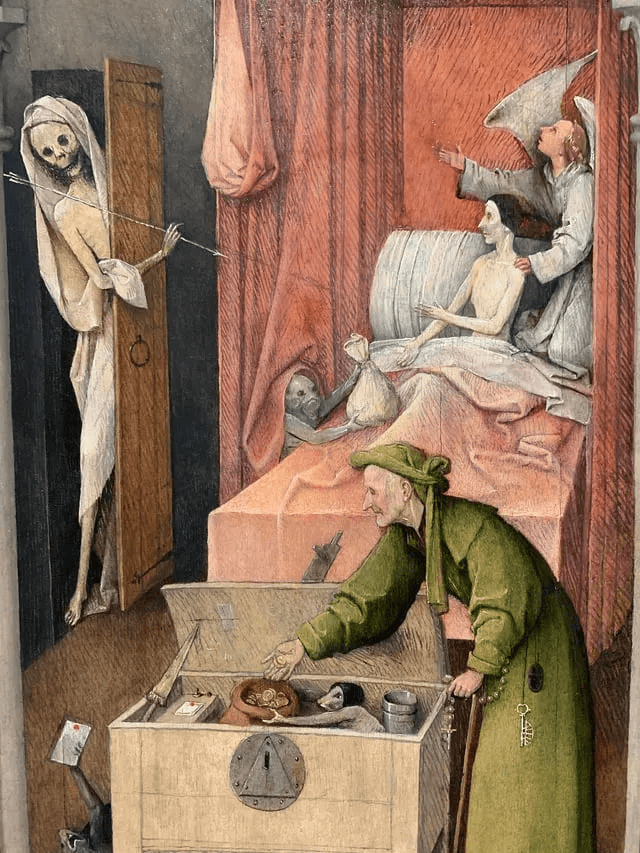
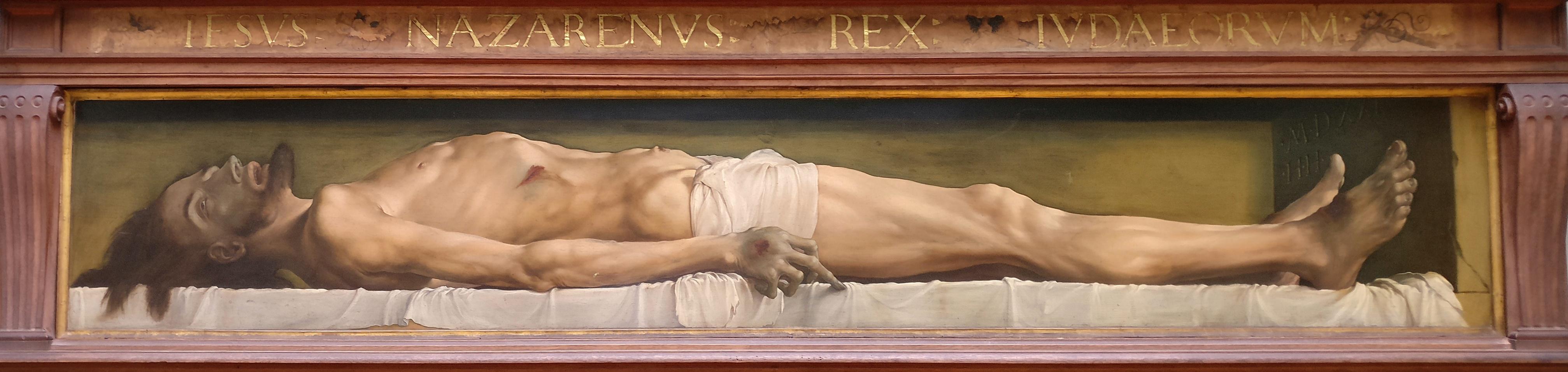
The Great Red Dragon and the Woman Clothed with the Sun (Rev. 12: 1-4) av William Blake (1805) – Brooklyn MuseumSaturn Devouring His Son av Francisco Goya (c. 1819–1823) – Museo del PradoDespair av Ilyas Phaizulline (c. 2000)Ivan the Terrible and His Son Ivan on 16 November 1581 av Ilya Repin (1885) – Tretyakov GalleryAll Souls' Day av Jakub Schikaneder (1888) – National Gallery PragueTod und Frau / La Mort embrassant une femme av Hans Baldung (c. 1517–1520) – Kunstmuseum BaselFlaying of Marsyas av Titian (c. 1570–1576) – Archbishop's Palace, KroměřížDante and Virgil av William Bouguereau (1850) – Musée d'OrsayThe Incredulity of Saint Thomas av Caravaggio (c. 1601–1602) – Bildergalerie Sanssouci, PotsdamSalome Bearing the Head of St. John the Baptist (Okänd konstnär)Untitled av Zdzisław Beksiński (1975)The Devil's Checkmate av Friedrich August Moritz Retzsch (c. 1832)Victoria Mortis av Owe Zerge (1920)Judith Beheading Holofernes av Caravaggio (c. 1598–1599) – Galleria Nazionale d'Arte Antica, RomThe Sin av Heinrich Lossow (1878)The Camden Town Murder av Walter Sickert (1908) – Yale Center for British ArtThe Severed heads av Théodore Géricault (1810-talet) – Nationalmuseum, StockholmThe Nightmare (The Dream) av Henry Fuseli (1781) – Detroit Institute of ArtsStudy After Velazquez's Portrait of Innocent X / Screaming Pope av Francis Bacon (1953) – Des Moines Art CenterDiomedes Devoured by his Horses av Gustave Moreau (1865) – Musée des Beaux-Arts de RouenSkull of a Skeleton with Burning Cigarette av Vincent Van Gogh (1886) – Van Gogh Museum, AmsterdamFaust in his study av Carl Gustav Carus (1852)Lucifer av Franz von Stuck (1890) – National Art Gallery, SofiaGhostly Vision av Francisco Goya (c. 1820-1823) – Museo del PradoPandemonium av John Martin (1841) – Musée du LouvreStańczyk av Jan Matejko (1862) – National Museum, WarszawaSalome with the Head of St John the Baptist av Guido Reni (c. 1638) – Galleria Corsini, RomThe Raft of the Medusa (Jéroft de la Méduse) av Théodore Géricault (1818–1819) – Musée du LouvreThe Triumph of Death av Pieter Bruegel the Elder (c. 1562) – Museo del PradoThe Scream (Skrik) av Edvard Munch (1893) – Nasjonalmuseet, OsloJudith and Holofernes av Artemisia Gentileschi (c. 1614–1620) – Uffizi, FlorensSatan presiding at the Infernal Council (Satan summoning his legions) av John Martin (1825)Isle of the Dead (Die Toteninsel) av Arnold Böcklin (1880–1886) – Kunstmuseum BaselAbbey in the Oakwood (Abtei im Eichwald) av Caspar David Friedrich (1809–1810) – Alte Nationalgalerie, BerlinIllustrations to Dante's Inferno av Gustave DoréThe Vision of St. Hubert av Franz von Stuck (1890)Wild Hunt av Franz von Stuck (1889) – Lenbachhaus, MünchenFaun by Moonlight av Léon Spilliaert (1900)Death of an Artist - The Last Friend av Zygmunt Andrychiewicz (1901)Untitled av Zdzisław Beksiński (1973)Untitled av Zdzisław Beksiński (1976)Untitled av Zdzisław Beksiński (1984)Self-Portrait with Death Playing the Fiddle av Arnold Böcklin (1872) – Alte Nationalgalerie, BerlinLaughing Fool av Jacob Cornelisz van Oostsanen (1500)The Anatomy Lesson of Dr. Deijman av Rembrandt van Rijn (1656) – Amsterdam MuseumSaturn av Peter Paul Rubens (c.1636–1638) – Museo del PradoDeath and the Miser av Hieronymus Bosch (c.1485–1490) – National Gallery of Art, WashingtonThe Body of the Dead Christ in the Tomb av Hans Holbein the Younger (1520–1522) – Kunstmuseum Basel
×
“Caligo non solum occultat — sed revelat.” Darkness does not merely conceal — it reveals.